

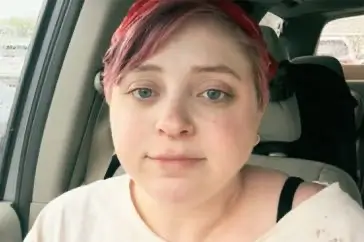
Elisabeth Weber, a 31-year-old mother from Greenville, South Carolina, is speaking out after being forced to carry a non-viable pregnancy for weeks due to her state’s restrictive abortion laws.
After learning that her fetus no longer had a heartbeat, Weber—who was nine weeks pregnant—was denied immediate medical care and told to wait until her body miscarried naturally.
“My womb became a tomb,” she said, describing the emotional and physical toll of carrying a fetus she knew had died.
Weber and her husband, Thomas, had already chosen a name for their baby boy—Lorenzo Thomas Weber, or “Enzo.” The pregnancy had been difficult from the start, with Weber suffering from hyperemesis gravidarum, a severe form of morning sickness that left her bedridden. Yet she had been filled with hope until her March 27, 2025 check-up revealed the fetus had stopped growing weeks earlier.
Despite the devastating news, doctors refused to perform a dilation and curettage (D&C)—a routine procedure to remove the fetus—citing South Carolina’s abortion ban, which prohibits abortion after six weeks.
“Even without a heartbeat, I was told we had to wait because of the law,” she recalled. “They said unless I started hemorrhaging or became septic, there was nothing they could legally do.”
Weber’s story gained national attention after she posted a raw, emotional TikTok from her car: “My baby is dead. There’s no heartbeat. And now I have to wait another week, knowing my baby is dead, to do anything about it.”
In the following days, a patient advocate helped her find another hospital, where doctors confirmed she had developed an infection. Still, she was denied a D&C and sent home with pain medication. The prolonged ordeal worsened the family’s hardship—neither she nor her husband could work, and his Crohn’s disease flared due to the stress.
Eventually, Weber was permitted to have the procedure—but seeing the word “abortion” on the medical paperwork shattered her.
“It broke me,” she said. “I couldn’t even grieve properly.”
Now, Weber is speaking publicly in hopes that her experience can lead to change. “This is dangerous. It’s hurting women,” she said. “I want people to know this isn’t just politics—this is about real lives.”
With the procedure behind her, Weber says she can finally begin to mourn her son. “My little Enzo,” she whispered.


