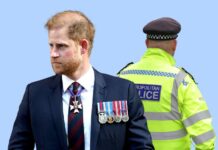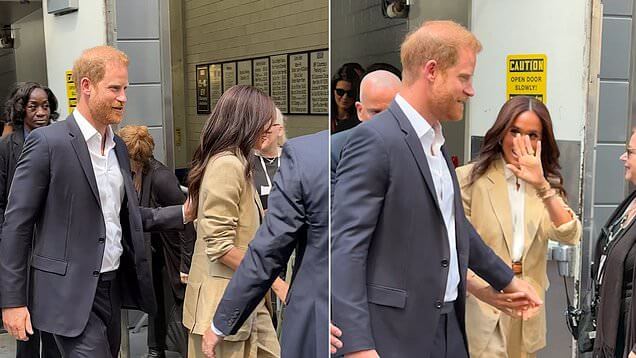
Former Home Secretary Lord David Blunkett stated that Prince Harry and Meghan Markle should receive a temporary, ‘middle ground’ level of taxpayer-funded government protection consisting of one or two traveling security officers rather than a full 24-hour back-up team, while their long-term living plans remain unclear.
He said it could be upgraded or downgraded over time depending on the perceived level of threat.
Such a ‘middle-ground’ arrangement would involve one or two protection officers travelling with Harry and were ‘perfectly reasonable’ to offer on a temporary basis.
There was further confusion after a source close to the couple said their move to the UK could last for as little as six months.
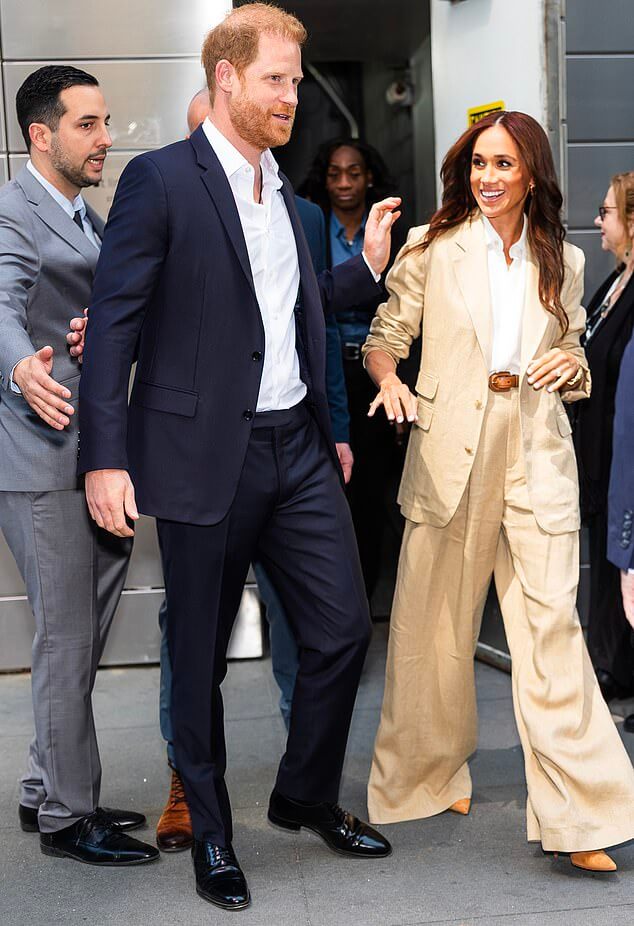
Lord Blunkett told The Times: ‘There are three areas of security… the fully blown, blacked-out back-up car with two or three close protection – one in the passenger car and the others in the back-up – on a 24-hour basis.
‘There’s then the middle ground… where you have one or two officers who travel with the principal, as they call it. The third is they get a driver with security training.
‘The middle of that is a perfectly reasonable thing to offer for the time being, and then it could be reassessed in a couple of years.’
Dame Emily, chairman of the Commons foreign affairs committee, said: ‘I would want to be reassured that his family are going to be safe. They deserve to be secure.
‘He is the son of the King, he has made a big contribution to our country through public service – that puts him and his family at risk.’
Fellow Labour MP Mike Tapp, a former Home Office minister, said a ‘clear-eyed assessment of the threat’ was needed for decisions about security.’
Tory leader Kemi Badenoch said: ‘He’s the son of the sovereign and that means he has a very high public profile, more than most politicians who get security.’
But Labour peer Lord Foulkes, a minister under Tony Blair, said the Sussexes’ security was a ‘private matter and they should deal with it personally’.
He added: ‘They are wealthy people and I wouldn’t have thought it is something that the taxpayer should be expected to pay for.’