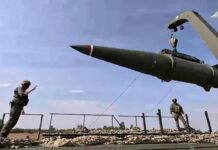
In a major shift in defence policy, Britain is set to reintroduce air-based nuclear weapons for the first time since the Cold War, responding to mounting threats from Russia.
The government is in advanced talks with the United States to acquire fighter jets capable of delivering tactical nuclear weapons. This would mark the UK’s most significant nuclear deterrent expansion in decades, adding an airborne platform alongside its existing submarine-based Trident system.
Chief of the Defence Staff Admiral Sir Tony Radakin and Defence Secretary John Healey are leading negotiations with Pentagon officials, focusing on procuring American-made F-35A Lightning II stealth jets. These jets can carry B61 gravity bombs — low-yield nuclear weapons currently deployed by NATO allies such as Germany.
This strategic update, detailed in the upcoming Strategic Defence Review set for release by Prime Minister Sir Keir Starmer on Monday, signals Britain’s intent to strengthen its role in NATO’s nuclear deterrent and boost defence industry production to wartime levels.
“We are being directly threatened by states with advanced military forces,” Starmer wrote in The Sun on Sunday. “So we must be ready to fight and win. After all, the best way to prevent conflict is by preparing for it.”
The government plans to raise defence spending to 3% of GDP by 2034 and has committed £1.5 billion to build six new munitions factories across the UK, supporting nearly 2,000 jobs.
Since the Cold War, Britain has phased out tactical nuclear weapons and the V-bomber fleet, focusing solely on its submarine-based deterrent. By contrast, the US maintains nuclear capabilities across land, air, and sea platforms.
Defence Secretary Healey stressed the increasing dangers: “The world is definitely becoming more dangerous. Nuclear risks are rising. For the first time since the Cold War, we face seriously increasing risks of state-on-state conflict. The lesson from Ukraine is that a country’s armed forces are only as strong as the industry behind them.”
If finalised, this move to equip fighter jets with nuclear weapons would mark a major evolution in Britain’s deterrence strategy, reinforcing its commitment to NATO and European security amid escalating tensions with Moscow.